Time as a Building Material
The fast pace is part of every architecture office. The amount of rush and pressure that runs through this profession often goes unnoticed because we've always lived with it. From architecture school into our professional lives. And I get it. I really do. Most of the time there are financial pressures, mortgage payments, leases, business plans, family decisions if it's a home, and so on. Delaying or prolonging these big decisions can cost a lot of money.
Although taking time has its wonders. I want to talk about that.
I've been lucky enough to be involved in projects that have taken more time than originally planned. There was a schedule, but out of a shared willingness and flexibility to create something better, that schedule stretched. One of these projects is called El Guayacán.
The project was the dream of a retired couple who, after traveling the world, came to Zipolite and knew they wanted to stay. With time and patience, they wanted to create a home and a business that worked for their life. And we all embraced that patience.
El Guayacán is the owners' personal home, with two bedrooms, three casitas for short-term rentals, and a shared pool area. The design took two years to complete. With meetings spread out over time and an extended design process, we arrived at a project that we all loved.
Then COVID hit. With government offices closed and uncertainty at the construction site, the project paused. It wasn't until 2022 that we resumed the project, giving us the opportunity to revisit it all over again.
It took four years to build. Building on the ridge of a mountain, preserving as many trees as we could, respecting the land and its surroundings, and working with only one access point meant we had to build from the furthest point back toward the entrance. We completed a project that feels completely immersed in the beauty of the surrounding forest. It opened, and from the very first day, people arriving at the project were mesmerized by the beauty, detail, and peacefulness it evokes. It has become both a successful business and a cozy home for its owners.
What changed because there was time?
The footprint of the building shifted ever so slightly to preserve more trees. The location of the pool changed so it would align with the overall composition of the project. The heights of different spaces were refined to follow the shape of the mountain. The focal points along the various paths were considered more deeply. Even the final path between the buildings was left undecided until the last minute because we wanted to understand the changes in the topography and the trees before making the final decision.
Looking back, I don't think the project became better simply because it took longer. It became better because the extra time allowed us to return to it repeatedly with fresh eyes.
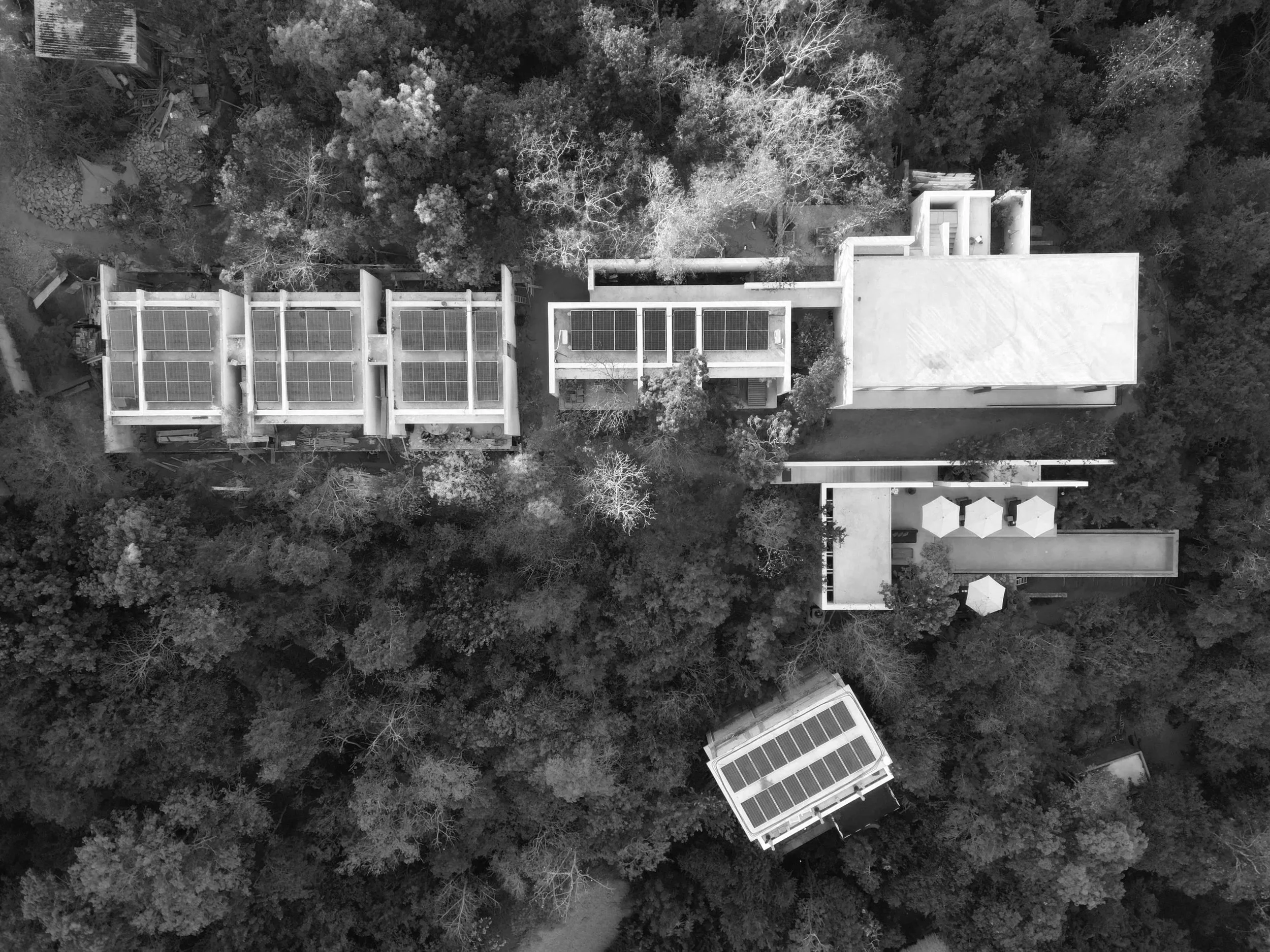
El Guayacan
When I worked with Mauricio Rocha back in Mexico City, he used to tell me that good architecture is the result of fully immersing yourself in a project and then letting it go. He understood that when you step away and let it sit, it creates mental space so that when you return, you can sense, feel, understand, and notice far more details that ultimately make the project better. And I feel that. I feel my vision narrowing, like a horse wearing blinders. When I step away and focus on a different project, meet with a potential client, visit another construction site, or simply take a short getaway, I come back with fresh eyes. I can revisit previous decisions and challenge them again, making the project better every time.
It's not always a clear or obvious decision, so it's hard to describe the exact benefits of this practice, but it can be anything. Sometimes it's recognizing that the proportions of a room always felt slightly off, even if you couldn't explain why weeks earlier. Sometimes it's realizing that the composition of the façade was compromised by the floor plan, and going back to those decisions so they work together. Sometimes it's changing the layout entirely because you've found a better solution. It's anything that was once decided but, when you return to it, no longer satisfies the level of perfection you're always striving for.
In today's world, there's an underlying pressure and sense of urgency layered on top of all of us. Everything moves fast. Everything around us flies by like an arrow toward its target. But the target keeps moving even faster.
Architecture will always have deadlines. It should. Buildings eventually need to be built. But whenever a project allows for it, I want to protect the moments when nothing appears to be happening. Those quiet intervals are often when the most important decisions are made. I will continue responding to the needs of every project that comes through my door, but I will also continue practicing slow architecture whenever I can. Because I don't want to build an endless list of projects. I want to build fewer, but much better, projects.
