The void
The Non-Space Architecture Needs
There is a kind of space that rarely makes its way into the world. It is as hard to photograph as it is to describe, and it is barely recognized at all. Maybe because it’s not space at all; it’s an absence. Or a non-space. A room with nothing in it, a space without a program or agenda, with no specific furniture or clear purpose. And yet, inside of these spaces, someone can feel held, can feel whole. They are spaces that, through their silence, evoke a sense of peacefulness and serenity.
I want to call this the void, though the word undersells it. Void means an empty space. A large, open gap or vacuum. But in architecture, when it's done right, it means almost the opposite. It's the one part of a building that isn't trying to do anything. Every other room in a house or a hotel or a museum is quietly instructing you: sit here, sleep here, look this way. The void withholds that instruction. And by withholding it, it gives something back that programmed space can't: time that belongs to you, not to the building.
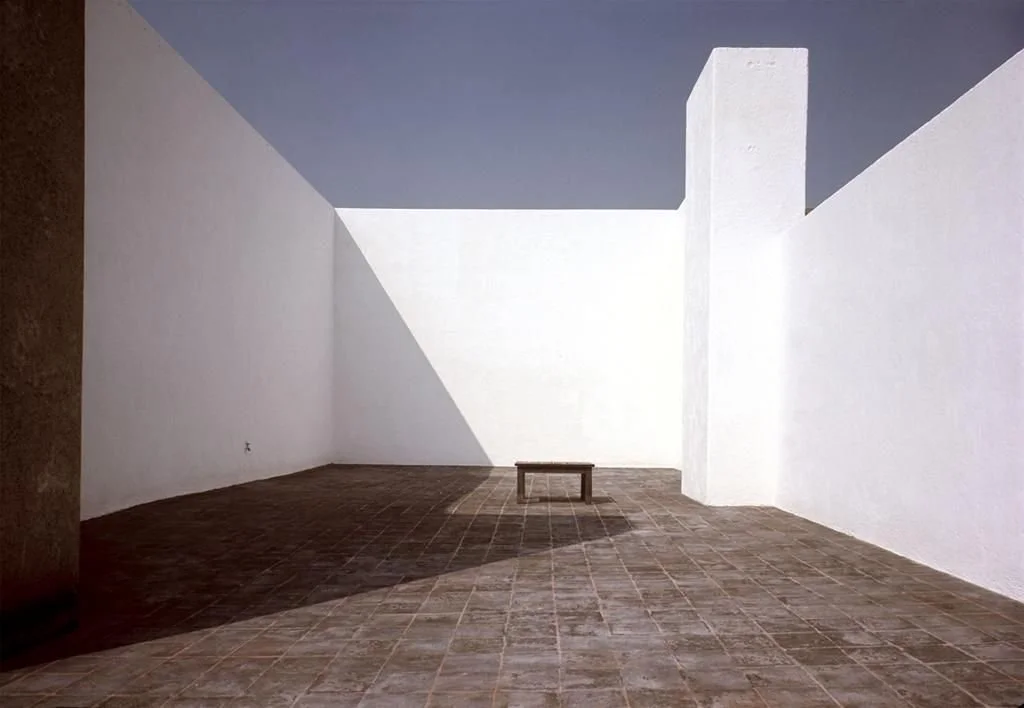
To try to understand it, let’s start by saying what it is not. It is not minimalism, which is a style. It isn't an accidental empty space, like an awkward corner that is hard to use or the space below a staircase. It is intentional and designed. It is a courtyard that feels out of place; it’s a hallway that maybe wasn’t needed with the only purpose to create a transition; it is an opening in the wall that, on the surface, makes no sense. A void done well is one of the most deliberate spaces an architect can build. It requires holding back where every incentive, commercial and aesthetic, pushes toward filling in.
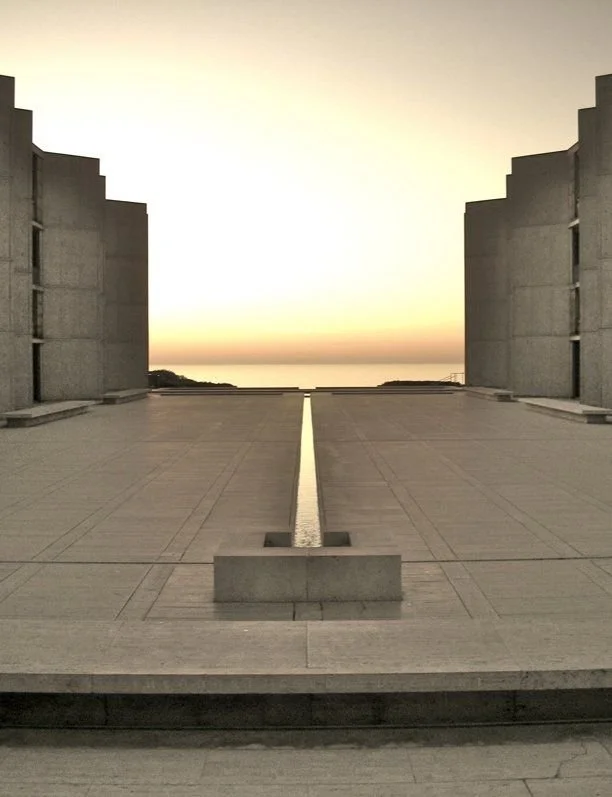
Louis Kahn understood this, as can be seen in the empty space inside the Exeter Library, for example, or in the courtyard of the Salk Institute in California. Here, he spent years deciding what to do with this space, thinking of trees, garden beds, or benches. It was not until he saw an exhibition of Luis Barragán’s work in New York that he invited him to the site to discuss what to do with the space.
Barragán walked the empty court and told Kahn to plant nothing. Not grass, not one tree, nothing. Make it a plaza instead, he said, and you'll have another facade to the sky. Kahn listened. The space was covered with travertine flooring and a single water channel that directs your attention toward the Pacific Ocean. It is this pure, empty space that has attracted so many photographers and has become a symbol of modern architecture ever since: the choice to leave a space contained but empty.
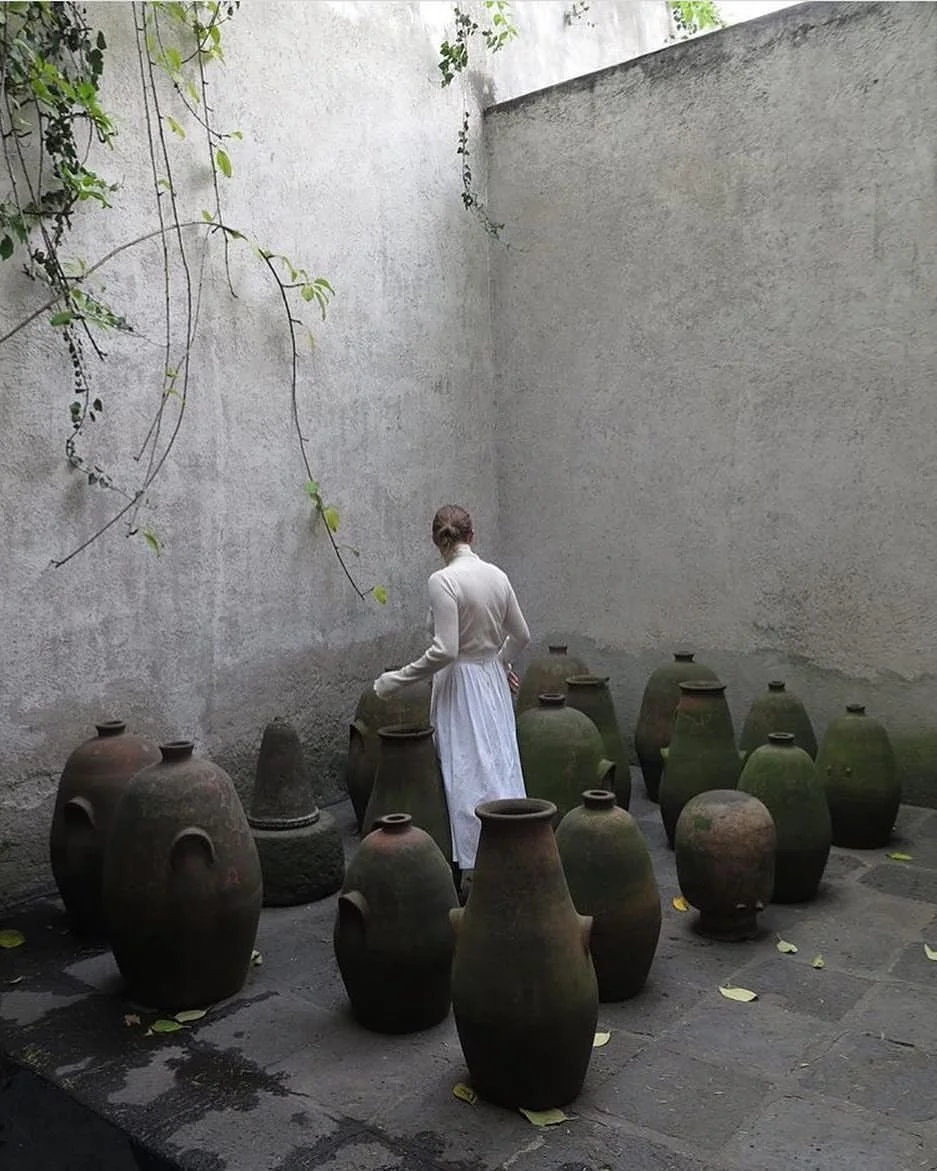
Barragán didn't arrive at that instinct out of nowhere. What he did on the rooftop of his own house, with its water patio and clay pots, or in his gardens, was deeply influenced by what he saw and learned in Europe, beautifully transformed by his experience in Mexican haciendas, convents, and churches, as well as archaeological sites like Teotihuacan.
Early in his career, Barragán traveled to Europe for the second time and came back with Le Corbusier's ideas about modern architecture, and about how new materials and society itself were changing.
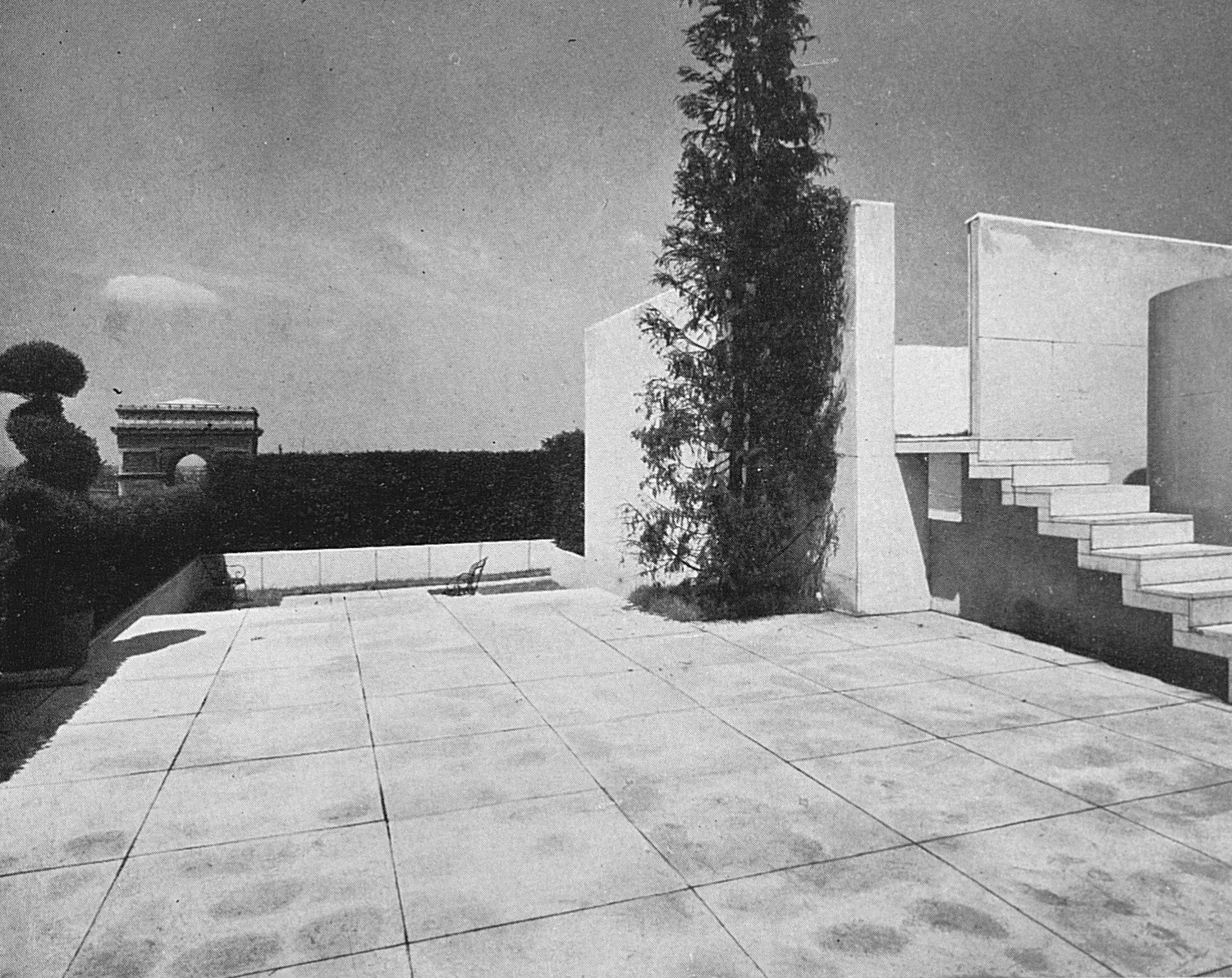
You can see an extreme version of that idea in Le Corbusier's own Beistegui penthouse in Paris, built on a rooftop above the Champs-Élysées. The apartment itself is almost beside the point. What Le Corbusier actually built on top was a sequence of open-air terraces, rooms with no ceiling but the sky, one of them a grass lawn walled in on all sides with a fireplace. The space, theatrical as it was, was also reminiscent of the same ideas of non-space, the void, the terrace that overlooks the sky. And Barragán, as a young architect, seems to have encountered some of the same lessons that Kahn would later articulate. (You can also see how impactful it was if you see the design of the staircase for his library.)
Le Corbusier, as prolific as he was, left a vast collection of ideas that are studied to this day, but the purest expression of this idea of the void isn't a plaza or a rooftop. It is a single window in a garden wall, on a small house Le Corbusier built for his parents on the shore of Lake Geneva. Villa Le Lac is famous for its interior window, an eleven-meter opening of glass that lays the whole lake and the Alps flat across one wall. But Le Corbusier also cut a second, much smaller window into a wall in the garden.
To begin with, he decided to raise a wall where there was no need for it. With this first gesture, he created a contained space inside the garden. Then he opened the wall toward the lake, making a final statement of intentional contemplation. It's not random or thoughtless. It is a way of scaling down a wide panoramic view, giving it meaning by containing it.
These are just some clear, famous, and well-photographed examples. But these non-spaces can be found in the most renowned architecture and in the most modest of projects. They remain silent, waiting to be discovered. And that’s the magic of it. They are meant for nothing, and they are there for everything.