The Quiet Lie of Contemporary Architecture
What's contemporary architecture? I started to think about it when, as an architect, people started pointing out new buildings or projects to me, trying to communicate some excitement about a contemporary practice like mine. Some of them I like; some of them, not so much. There was something in the abuse of the color black to make the final statement that something was "contemporary" — even if the composition felt like a New England style with just a metal roof and a black facade.
If you look it up,contemporary it's simply something that is happening, existing, or living at the present moment. So maybe everything that's been built in this exact moment IS contemporary. But is it? Nowadays, all around the world people keep building traditional architecture. Concepts like minimal, mid-century modern, mediterranean, brutalist, etc. still fill pages of architecture publications. And still, "contemporary" keeps peeking its head into some headlines as a unique "style." But the images are collages of different things that, put together, lack a unique thread.
So, what is it then? I don’t think the definition of style really encapsulates the complex dynamics of the practice, even more so if you set up design in different countries with diverse setups, climates and cultures. It's more of a disposition – Here's my perspective on what makes a well-designed contemporary building — even if it's not brand new.
Take, for example, Villa Busk by Sverre Fehn, built in 1990. Or Casa Vittoria by Lluís Clotet and Oscar Tusquets, built in 1975. Or look even further back at Philip Johnson's Wiley House, built in 1952 — a time when gold-plated accessories were a thing, when the concept of mid-century modern was at its peak. Still, if you look into those projects, you could find a very settled common denominator. It's clearly not the furniture, which has little to do with architecture, nor the geometric composition, design elements, nor even the materials.
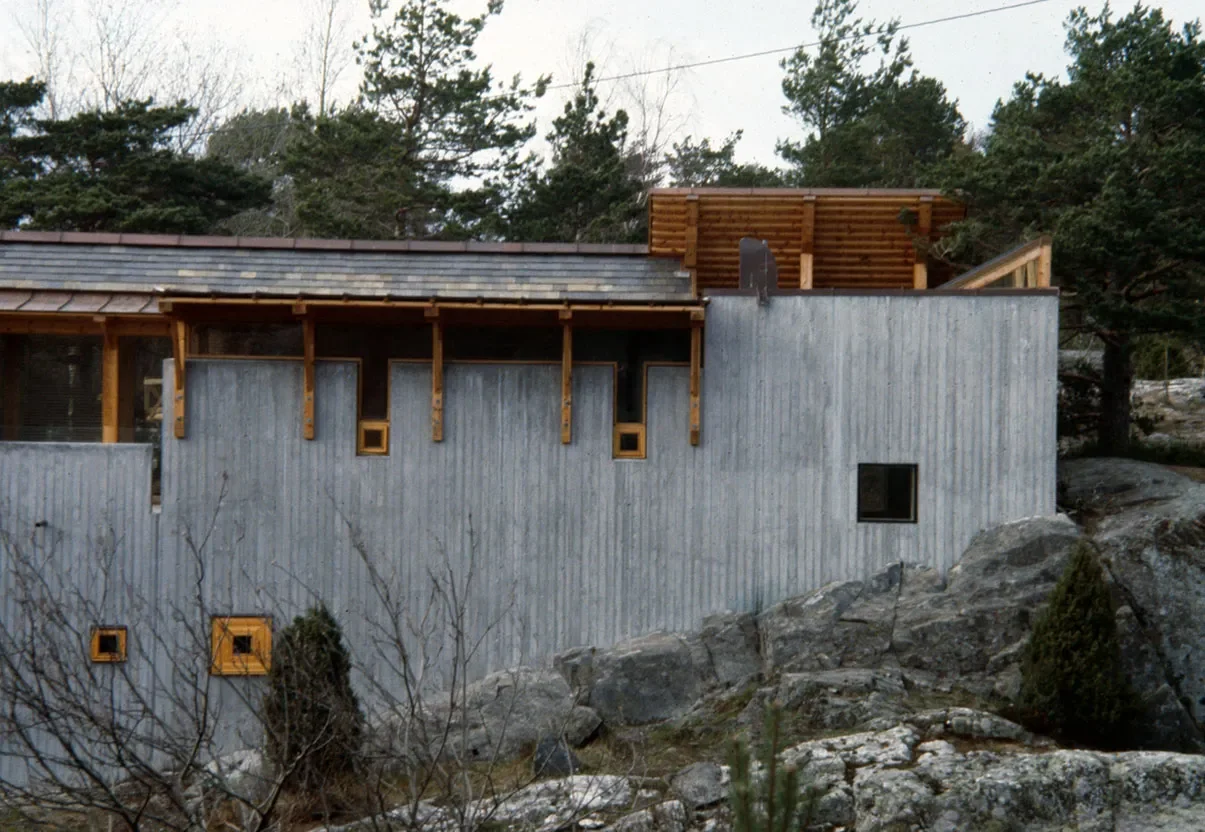
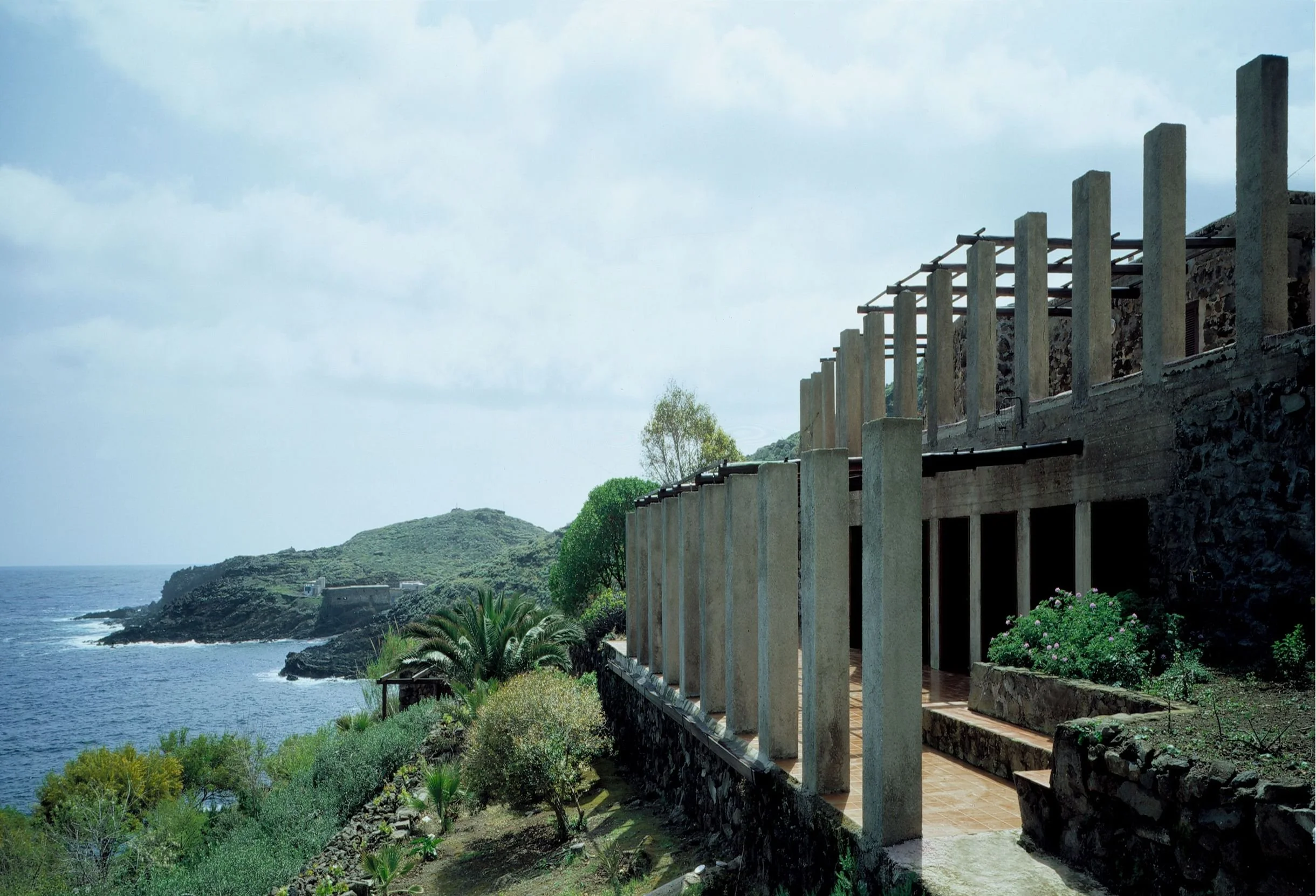
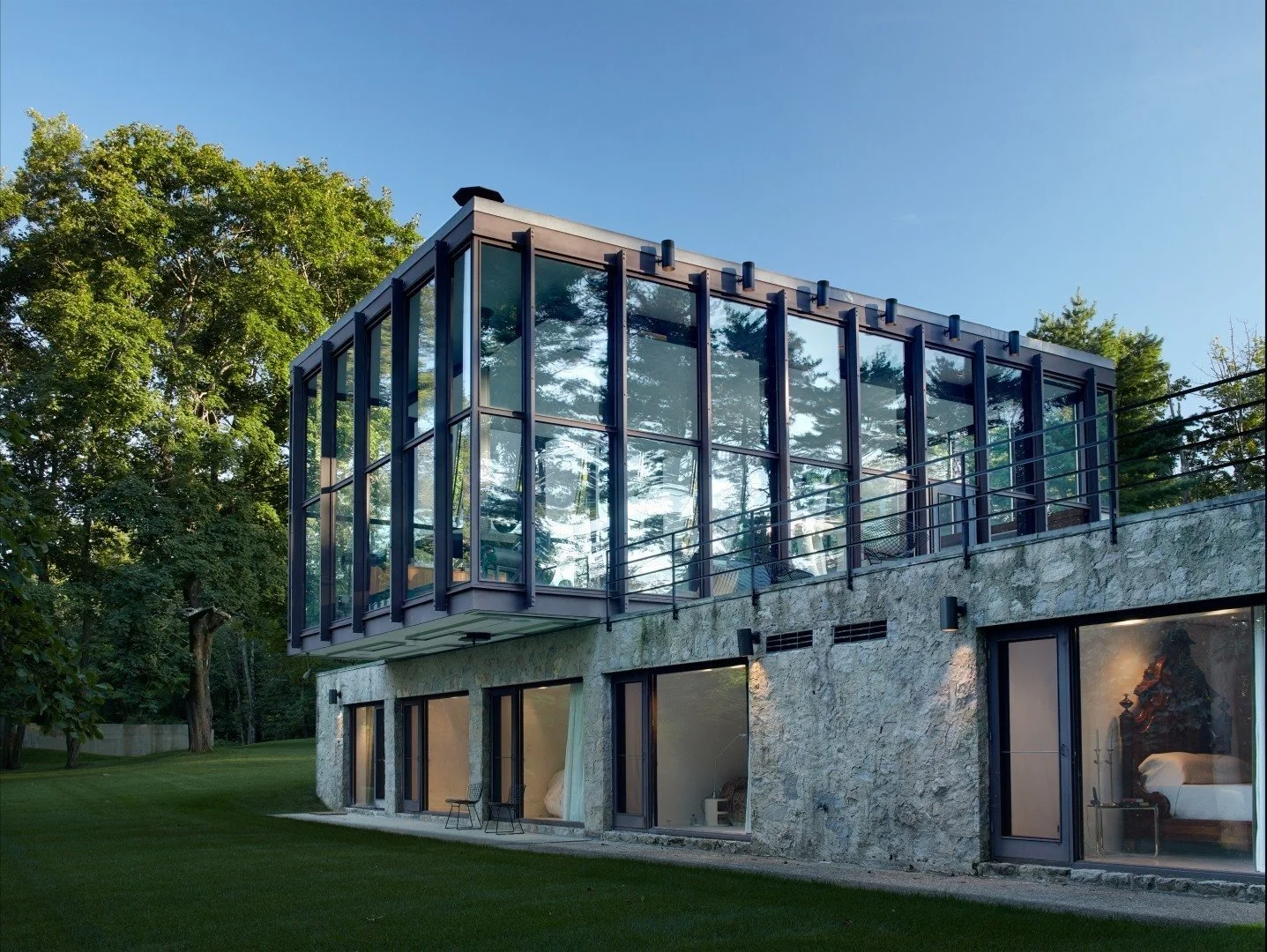
If you strip down those buildings — take away all the outdated faucets, kitchen supplies, interior design language, even the interior finishes — everything that you could date in your head, like "that's clearly a mid-century modern element" — you would keep the soul of the project, the core language of the architecture that could be photographed and appear in Dwell and look like a brand-new building.
For me, that consolidates one of the core concepts of good contemporary architecture. These buildings are, by nature, not defined by time. They could turn into ruins, peel off every layer, and still emerge as complex structures, capable of holding human experience and touch a deep sense of belonging.
The second core concept for me is the relationship with the landscape. Those three projects hold a full relationship and understanding of their placement. They are not just sitting on the ground — they are in conversation with it. They go hand in hand, not destroying but enhancing the place. Architecture always has a presence over the landscape, like the Parthenon or Pyramid of the Moon. But the conversation with it feels less like talking and more like flirting. The way they interact comes from a sense of serenity, silence, and respect. I'm not saying that the Parthenon, or the pyramids are lesser projects or wrong. It's just how the language of architecture interacts with nature.
Take the Wiley House: two simple volumes — one of stone and the other of steel and glass. The conversation with the landscape begins by bringing the stone as the foundation from which the project stands. It squares the soil that turns into architecture, similar to what Villa Busk does with the concrete, which also holds a similar color palette to the rock beneath it. Both holding on top a lighter structure that very elegantly comes into place to complement the composition. Casa Vittoria similarly rises from the ground, mimicking the shape of the mountain, and also introduces this element of lightness with those concrete pillars that can hold temporary shades, enclosing an atmosphere and defining a terrace.
There's also a use of silence that's strangely consistent in today's practice. Again, not like a speaker playing music but in a way of creating moments of transition with very few elements.. This is shown like a windowless facade, an empty courtyard, a corridor that maybe it’s a bit darker or has nothing but doors. Silence in a world full of stimuli I feel it’s the architect trying to give a break to the user almost like a gift. A moment to breathe deeper, or to break invasive thoughts.
This idea of silence if very hard to photograph so it’s not really published as much but projects like Casa Cometa by Taller Rocha + Carrillo are filled with corridors, patios, bridges, and staircases where the light dimmed down, the space gets narrowed, or it’s just empty. Those moments don’t translate into a picture but the real experience does get into your nervous system.
Now take those elements and correlate them with the House of the Big Arch by Frankie Pappas, built in 2019; the Zinc Mine Museum by Peter Zumthor, built in 2016; or (if I may) The GuayacánProject , built in 2025. Similar to the first three projects, they don't share the same climate, the same culture, or even the same hemisphere. And still, like the others, they each correlate with the landscape — touching it with needles or rising from the ground — with serenity, elegance, and respect. They are shaped by their distinct surroundings, which makes them radically different (understandably), but they engage with the landscape in a similar way.
They embrace moments of silence, they hold this contrast between openness and groundedness, between light and shadow, between heaviness and lightness — all with a language that tries not to be bound by time. They could have been built 70 years ago, or 100 years in the future, and they would hold their presence and character with the same strength as they do right now. And maybe that's the point. The best buildings don't ask you to admire them from a distance. They pull you in, slow you down, make you breathe differently. That's not a style. That's architecture doing what it's always been capable of — and rarely does.
